November 24, 2026
Building Better Cartoon Story Videos: Prompts That Help Kids Create Original Characters
By @thenurserynotebook
Why Character Creation Matters in Cartoon Story Videos
Children love making up stories, but sometimes they get stuck at the character stage. They draw a generic hero or copy a favourite movie character, and the story feels flat. When you help a child imagine someone original, the whole cartoon video becomes more engaging. The child invests in the character's wants, fears and quirks, and the narrative flows naturally from there.
For parents, teachers or anyone making cartoon story videos with kids, having a set of reliable prompts makes the difference between a rushed sketch and a character the child remembers weeks later. These prompts work whether you are using pencil and paper, a tablet app, or a tool like Fluxnote. The key is to ask questions that spark visual and emotional details, not just a name and a colour.
Start with a Feeling, Not a Description
Most children, when asked to invent a character, begin with appearance: "She has red hair and a blue dress." That is fine, but it rarely leads to an original character. Instead, prompt them with an emotion or a situation. Ask: "What makes your character angry?" or "What does your character do when nobody is watching?" This shifts the focus from surface traits to personality. Once the child has a core feeling, the appearance follows naturally. An angry character might have sharp eyebrows or clenched fists. A shy character might hide behind a large hat.
Try this prompt: "Your character wakes up one morning and finds something has changed in their room. What is it, and how do they react?" The answer reveals whether the character is curious, scared, adventurous or cautious. That reaction becomes the seed for the rest of the story.
Use the Environment to Build Identity
A character's home tells a lot about them. Ask the child to describe where the character lives. Is it a treehouse, a cave, a spaceship or a cottage made of gingerbread? What objects are lying around? A character who keeps a collection of shiny stones is different from one who stacks old books. The environment gives the child a concrete world to explore, and the character grows out of that world.
For cartoon story videos, the setting is often the first thing the viewer sees. If the child has designed a messy workshop with half-finished inventions, the audience immediately understands that this character is an inventor who never finishes anything. That is a story hook all on its own.
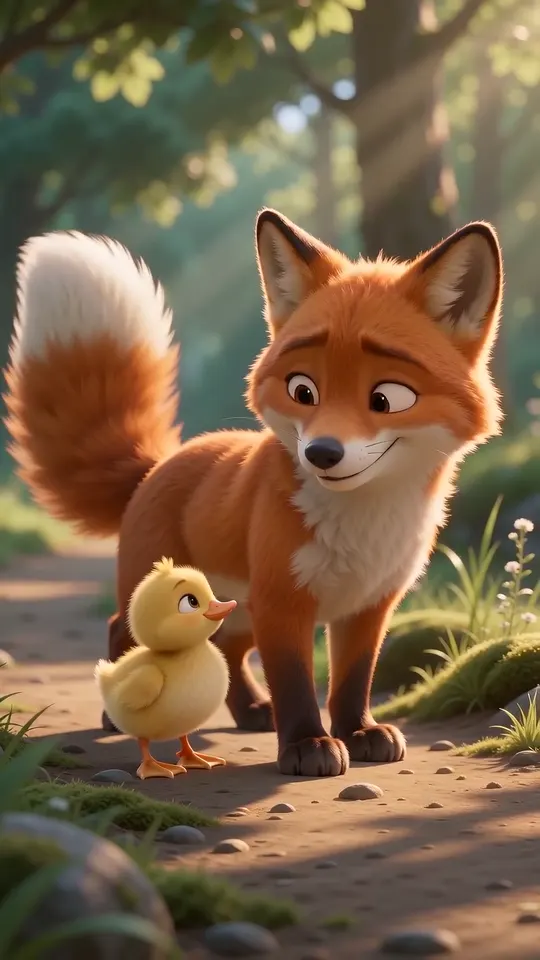
One useful technique is to ask the child to draw the character's bedroom or favourite spot. Then ask: "What is the one thing in this room your character would never throw away?" The answer often reveals the character's deepest value or a past event that shaped them.
Give the Character a Contradiction
Real people are full of contradictions, and so are memorable characters. A brave knight who is terrified of spiders. A brilliant scientist who cannot tie their own shoes. A cheerful monster who only wants to be left alone. These contradictions make characters feel original because they are not one-note.
Prompt the child with: "What is something your character is really good at, and what is something they are surprisingly bad at?" The contrast creates tension and comedy. In a cartoon story video, that tension drives the plot. The brave knight has to overcome his spider fear to rescue a friend. The scientist's untied shoelaces cause a lab accident. The child now has a story, not just a character sketch.
Another prompt: "Your character has a secret. What is it, and who are they trying to hide it from?" Secrets are powerful because they create a gap between what the character shows and what they truly are. That gap is where drama lives.
Let the Character Talk
Dialogue is a fast way to make a character feel real. Ask the child to give the character a catchphrase or a favourite word. Maybe the character always says "Oh, crumbs!" when surprised, or ends every sentence with a question. A character who speaks in rhymes, or one who never uses the word "I", instantly stands out.
For younger children, you can prompt: "What does your character say when they are happy? What do they say when they are annoyed?" The child can then practice speaking in that voice. When you record the cartoon story video, the character's voice becomes a memorable feature. Even without voice acting, the written dialogue in captions carries the personality.
A good exercise is to write a short conversation between two characters the child has invented. The child must keep each character's voice consistent. If one character is grumpy and the other is bubbly, the lines should reflect that. This forces the child to think about how personality shapes language.
Use a Character Sheet Template
A structured template helps children organise their ideas without feeling like a chore. A simple character sheet might include spaces for: name, age, home, best friend, biggest fear, favourite food, and one special skill. The child fills it in, and the sheet becomes a reference for the whole story. If the character later needs to solve a problem, the child can look at the sheet and pick a skill or fear that fits.
You can also add a section for "what others think" versus "what is really true". This teaches children that characters have inner lives that other characters may not see. That nuance elevates a cartoon story video from a simple sketch to a real narrative.
If the child is using a digital tool to make cartoon story videos, the character sheet can be a separate page or a note file. The important thing is that the child has a place to keep all their ideas together. When they lose inspiration mid-project, the sheet reminds them of the character's details.
One of the simplest prompts for a character sheet is: "If your character met a stranger, what would the stranger notice first?" The answer might be a loud laugh, a scar on the cheek, or a pet that follows everywhere. That first impression is what the audience will remember.
Bringing It All Together with the Right Tool
Once the child has a strong character, the next step is to turn ideas into a finished video. The prompts above work with any medium, but a tool that handles narration, captions and cartoon-style animation saves time and keeps the child focused on creativity. When you use a fluxnote video generate approach, the character descriptions you have built can become the basis for the visual style and the spoken story. The child describes the character's appearance and personality, and the tool translates that into a consistent cartoon look across every scene.
Many children find it easier to refine a character when they see it animated. They might decide the hair should be longer, or the character should wear a scarf. That feedback loop between imagination and visible output is powerful. The child learns that characters are not fixed at the first drawing; they evolve as the story grows.
A final prompt for any child: "What would your character do if they met another character from a different story?" This cross-over thinking helps the child see their character as someone who exists beyond the current plot. It also sparks new story ideas. Maybe the brave knight and the shy inventor team up to build a flying machine. The possibilities are endless, and they all start with a child imagining someone original.
When you build cartoon story videos with children, the goal is not perfection. It is the process of asking questions, trying answers, and laughing at the results. The prompts in this article are starting points. Adapt them to the child's age and interests. A six-year-old might love silly details like a character who eats only purple food. A ten-year-old might enjoy a character with a tragic backstory. The same prompt can lead in very different directions, and that is exactly what you want.
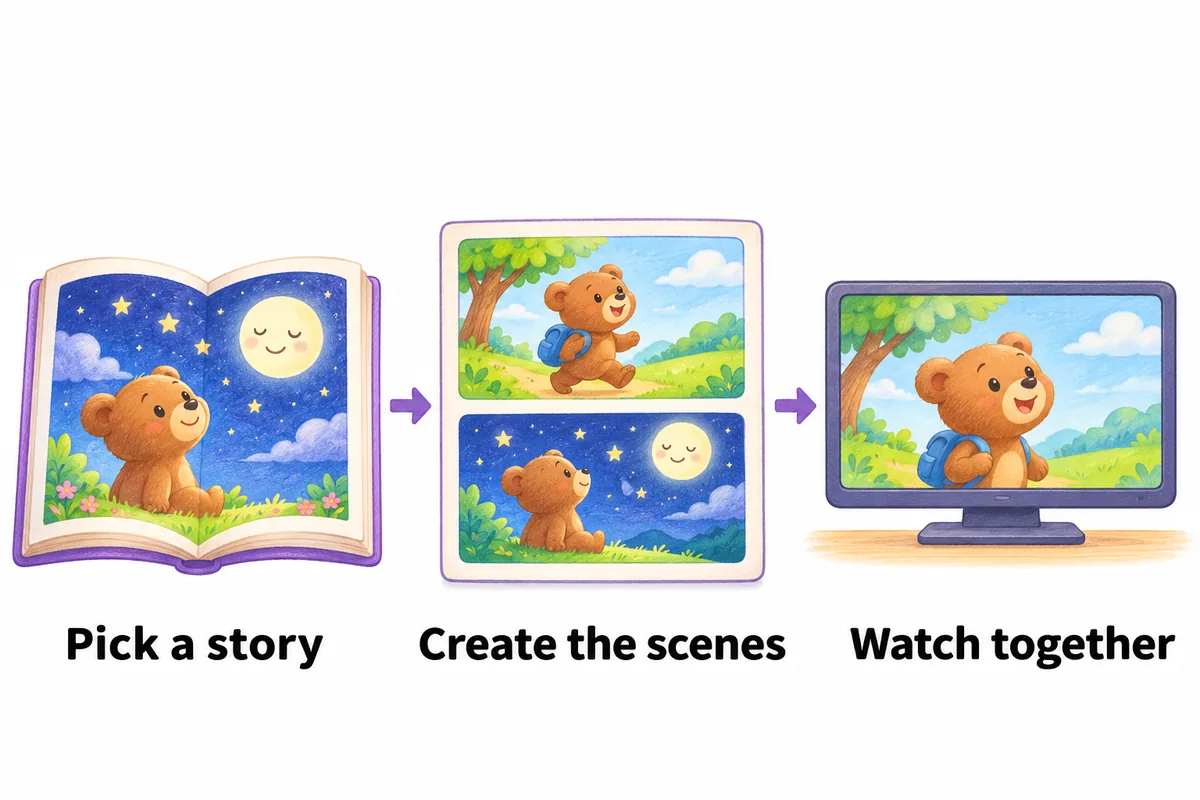
If you are using a tool like Fluxnote for the video generation, remember that the character sheet you build with the child is your script. The more specific the character details, the easier it is to create a story that feels true to that character. A character who loves puzzles will approach a locked door differently than a character who loves to smash things. That consistency is what makes a cartoon story video feel professional, even when it is made by a child.
You can also use the fluxnote video generate feature to quickly test different character looks. If the child is unsure about a character's colour scheme or outfit, generate a short sample scene and see how it reads on screen. This trial-and-error process is fun and educational. The child learns that creativity is not about getting it right the first time; it is about exploring possibilities.
Ultimately, the best prompts are the ones that make the child forget they are creating a character. When they are too busy imagining what the character would do in a funny situation, the character becomes real to them. And a character that feels real to the creator will feel real to the audience too.
Fluxnote on social media
 Twitter
 LinkedIn
 Facebook
 Instagram
 YouTube
 Discord
❧